Experience the best of The Palace Museum

Crafted by Headout, a global experiences brand offering curated tours, tickets & experiences. Discover with ease, book with peace.
Loved by over 55 million guests worldwide


How Headout makes choosing experiences effortless
We curate the best ways to experience

We research and organise all unique experiences - from tickets to tours to special combos - so you get all the choices without the clutter.

We partner with the best

Every supplier is vetted for quality, reliability, and value so you only get top rated experiences. No surprises, no disappointments.

All the best options, in one place

Each experience is thoughtfully organised to give you maximum availability, great value and an easy way to choose.

Book with complete peace of mind

Free cancellations, Flexible payments, and 24/7 support - thoughtfully designed for flexibility, assurance, and total peace of mind.

Slide 1 of 4

Slide 1 of 4

Forbidden City tours: Quick overview

  • Ways to explore: The Forbidden City has self-guided entry, small-group guided tours, large-group tours, private tours, and full-day combo day trips.
  • What entry covers: Base tickets cover the Palace Museum route; some variants add Tiananmen Square, Treasure Gallery, and Clock Gallery.
  • Best add-ons: Treasure Gallery and Clock Gallery are the most useful upgrades if you want more than the main central axis.
  • Guide choice: Pick small-group tours for more interaction, or private tours for the most flexible pace.
  • Queues & access: There’s no true fast lane. All visitors still pass passport checks and security screening.
  • When to book: Tickets release 7 days ahead at 8pm Beijing time and popular dates can sell out within minutes (As of 2026-09-10).
  • Smart nudge: If you want the simplest booking path, choose a guided or bundled entry option early.

Know your ticket options ↓

What to expect at Forbidden City (Palace Museum)

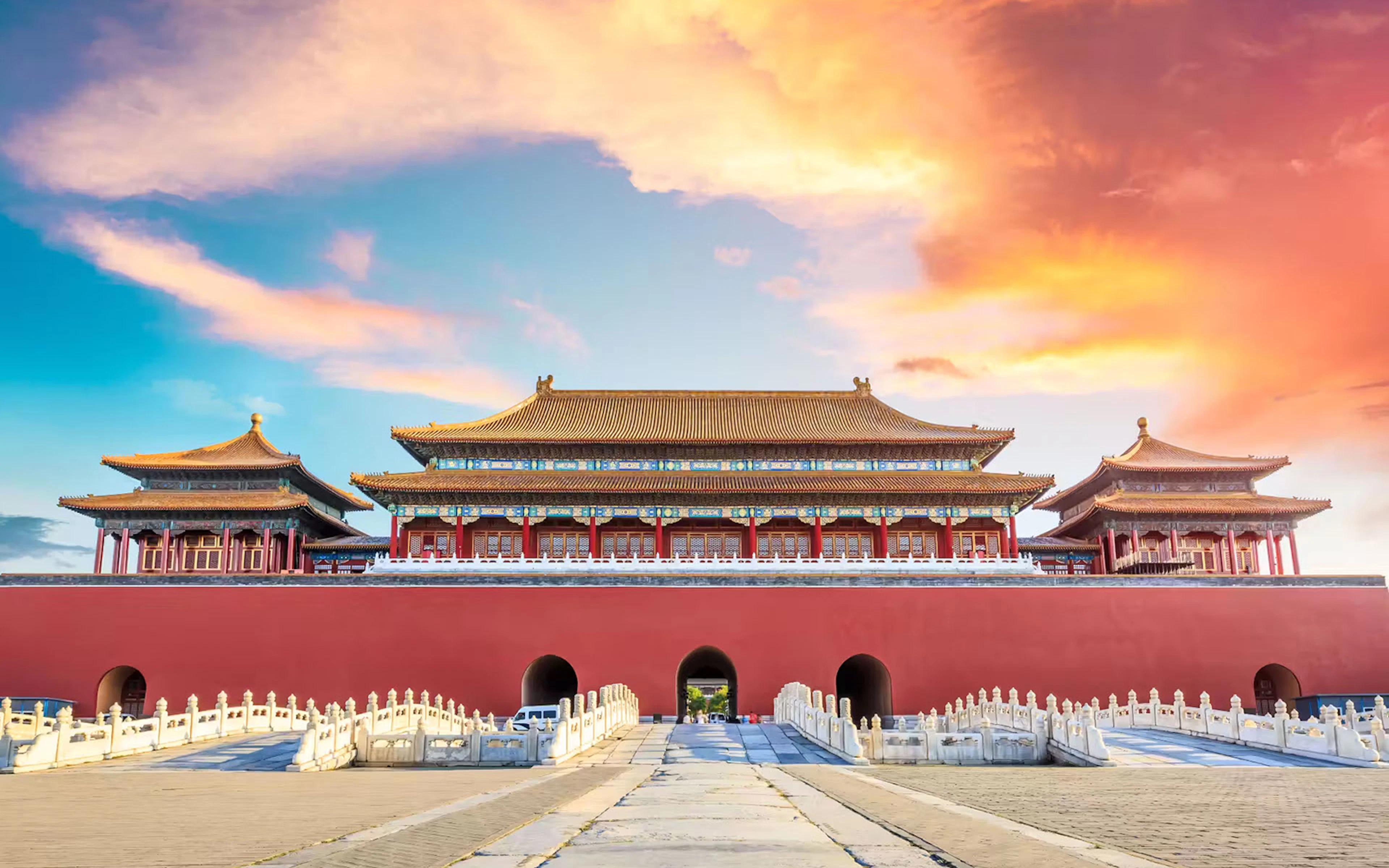
Meridian Gate, main entrance to the Forbidden City, Beijing, China, under a clear blue sky.
1/6

Enter through Meridian Gate

Begin at Wumen, the vast southern portal once reserved for imperial arrivals.

Cross the Golden Water Bridges

Five carved marble bridges span the Inner Golden River, then the Gate of Supreme Harmony opens onto the ceremonial core.

Hall of Supreme Harmony

This is the architectural high point: a 30-metre hall on a triple-tiered marble terrace, with the Dragon Throne at its heart.

Into the Inner Court

Past the public grandeur, the mood tightens into lived-in imperial space.

Finish in the Imperial Garden

The route softens at Yuhuayuan, the 12,000 m² garden near the north end.

Add the side galleries

For more than the main axis, add the Treasure Gallery for the Nine Dragon Screen or the Clock Gallery for Qing-era mechanical timepieces.

Things to know before booking your Forbidden City tickets

Booking window

Forbidden City tickets release 7 days before the visit date, usually at 8pm Beijing time, and regular walk-up sales are not available. Peak dates can disappear quickly, so an English-booked entry option is useful if you want the reservation handled for you. (As of 2026-09-10)
Checked: September 2026

What’s included

Base admission covers the main one-way palace route, including the major courtyards, halls, and Imperial Garden. Treasure Gallery and Clock Gallery need an added-access variant, and Tiananmen Square needs its own reservation unless your booking already bundles both.

Entrances & flow

All visitors enter through Meridian Gate on the south side and exit north at Shenwumen or east at Donghuamen. “Skip-the-line” here means booking help, not a faster entry lane. Security and passport checks still apply to every ticket type.

Ways to explore

Choose plain entry if you only need the reservation sorted. Live guided options add historical context and easier routing through a very large site. Formats range from large join-in groups to small groups of 15 and private groups of 5.

Policies & rules

Bring the original passport used at booking, because name mismatches can lead to denied entry. The route is strictly one-way with no re-entry. For mobility planning, the central axis is the safer choice because some side areas are only partly step-free.

Compare your Forbidden City ticket options

Ticket typeGroup sizeIncludesWhy pick thisRecommended tickets

Forbidden City Tickets

Self-paced (no group)

General admission; choose Treasure Gallery + Clock Gallery, or Treasure Gallery only

• Self-guided, so you set your own pace • Choice of single or dual bonus-gallery access

Entry tickets

Forbidden City Guided Tour (Join-in, Large-Group)

Large join-in group

Admission + guided commentary; choose Treasure Hall + Clock Hall, Treasure House, or excluding the Inner Hall

• Guide included for context and navigation • Choice of hall coverage at a large-group price point

Forbidden City Guided Tour, Large-Group

Forbidden City Guided Tour (Join-in, Small-Group up to 15 people)

Small join-in group (max 15)

Admission + guided commentary; choose Treasure Hall + Clock Hall, Treasure House, or excluding the Inner Hall

• Smaller group cap than the large-group tour, same hall-coverage choices

Forbidden City Guided Tour, Small-Group

Forbidden City Guided Tour (Private-Group up to 5 people)

Private group (max 5)

Admission + private guided commentary

• Group capped at 5, no joining with other travelers • Guide dedicated to your party only

Forbidden City Guided Tour, Private-Group

Forbidden City, Tiananmen Square and Mutianyu Great Wall Tour

Small group

Forbidden City + Tiananmen Square + Mutianyu Great Wall in one tour

• Combines three sites into a single day out • Cuts down on separate bookings/transfers

Forbidden City, Tiananmen Square and Mutianyu Great Wall Tour

Forbidden City, Tiananmen Square, Temple of Heaven and Summer Palace Tour

Small group

Forbidden City + Tiananmen Square + Temple of Heaven + Summer Palace in one tour

• Combines four sites into a single day out • Cuts down on separate bookings/transfers

Forbidden City, Tiananmen Square, Temple of Heaven and Summer Palace Tour

Explore the Forbidden City

Main ceremonial route – Ming and Qing core

Most first-time visits follow this south-to-north route from Meridian Gate to the Gate of Divine Prowess. It links the major ceremonial and residential courts in sequence, with wide stone plazas first, then tighter palace yards near the northern end.

State ceremony halls – early route

The Outer Court contains the public, ceremonial core used for coronations, weddings, and court ritual. Just beyond the Gate of Supreme Harmony, this broad southern zone opens into the palace’s largest courtyards and its main throne halls.

Ceremonial architecture – Ming and Qing axis

Hall of Supreme Harmony, Hall of Central Harmony, and Hall of Preserving Harmony stand one behind another on the central axis. Visitors cross raised marble terraces here before the route narrows toward the more residential Inner Court.

Imperial residential zone – later route

North of the Gate of Heavenly Purity, the mood shifts from ceremony to court life. This central zone groups the emperor’s residence, empress quarters, and service courts, with smaller courtyards and shorter sightlines than the Outer Court.

Main residential hall – Ming and early Qing

This hall anchors the Inner Court and served as the emperor’s residence for part of the imperial period. On the central axis just after the outer ceremonial halls, it works best as the transition point into the living quarters.

Palace residences – inner eastern wing

These adjoining residential courts sit east of the Inner Court’s center line and were used by imperial consorts and family members. They make a quieter detour from the main route, with enclosed yards and more compact hall groupings.

Palace residences – inner western wing

Opposite the eastern residences, this west-side cluster continues the domestic side of the palace plan. Short lateral walks from the central axis lead into repeated courtyard compounds, useful if you want living spaces beyond the headline halls.

Imperial decorative arts – eastern palace area

This paid add-on in the Palace of Tranquil Longevity area focuses on court treasures, jade, gold, and ceremonial objects. It sits east of the main axis and also includes the Nine Dragon Screen, making it the clearest art-focused detour.

Mechanical clocks – Qing court collection

This separate gallery presents imported and court-collected mechanical clocks associated with Qing imperial taste. Usually visited as an eastern-side detour, it lies away from the main hall sequence and rewards visitors who want a more focused museum stop.

Garden landscape – route finale

At the north end before the Gate of Divine Prowess, this garden provides the route’s main shaded pause. Rockeries, cypress trees, and pavilions compress the scale after the big courts, and it is the last major stop before exit.

What to see at Forbidden City
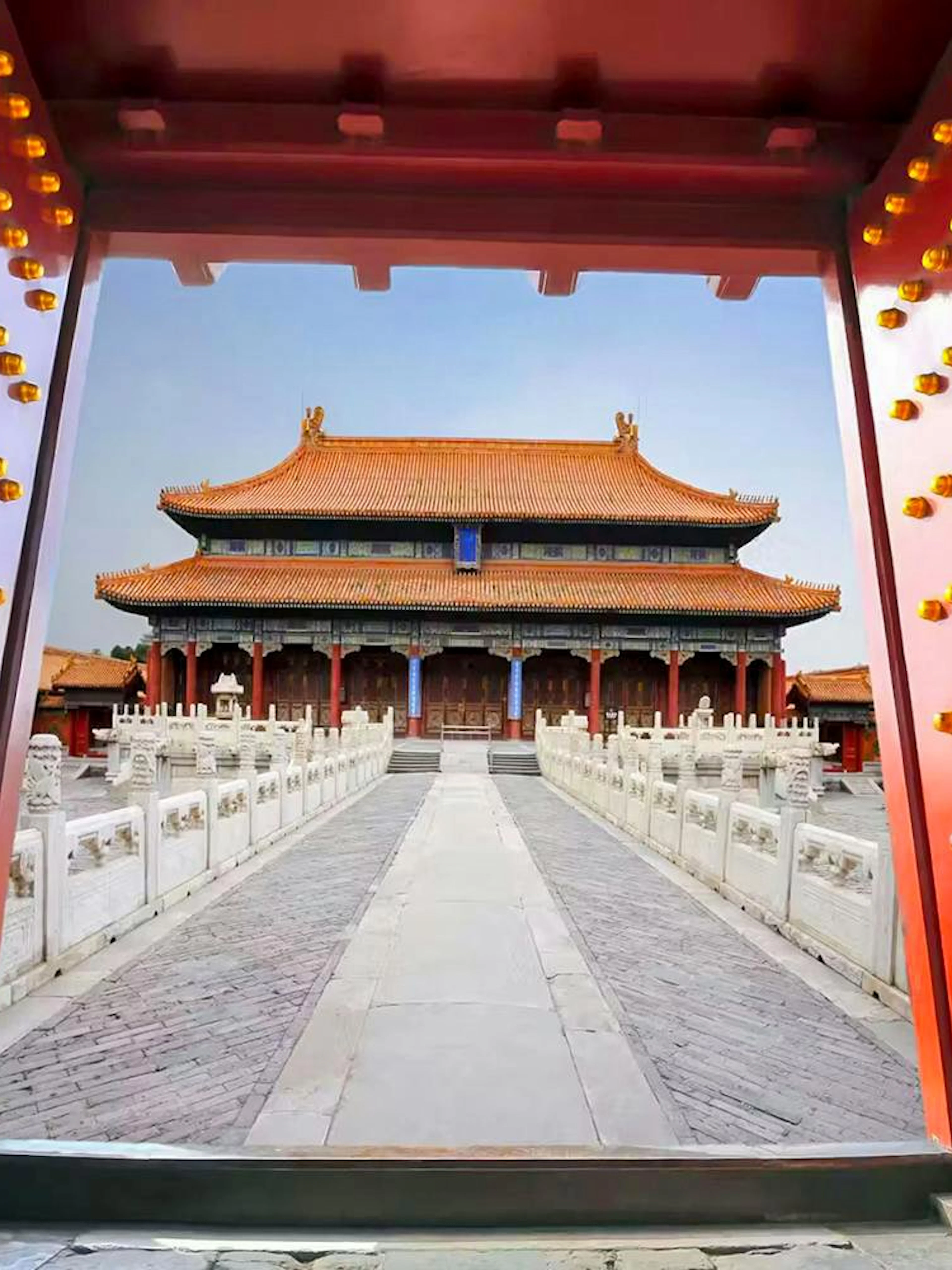
Grand red gates framing the Palace Museum entrance in the Forbidden City, Beijing, China.
1/6

Meridian Gate (Wumen)

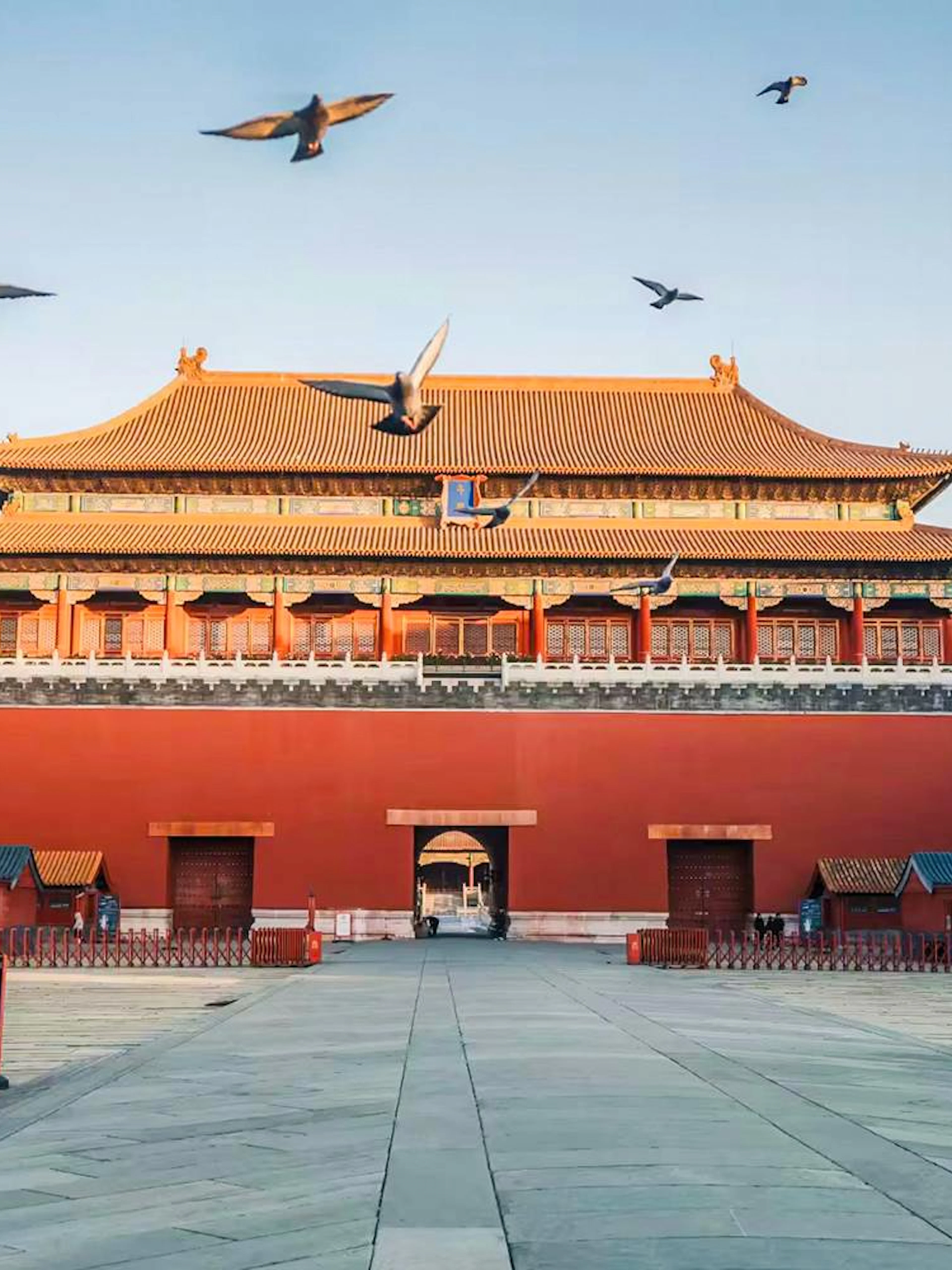
Every visit begins at this monumental southern gate, where the emperor once used the central archway and ranked officials entered by side passages. Its U-shaped silhouette and ceremonial scale introduce the palace’s strict hierarchy before the courtyards open up.

Hall of Supreme Harmony (Taihedian)

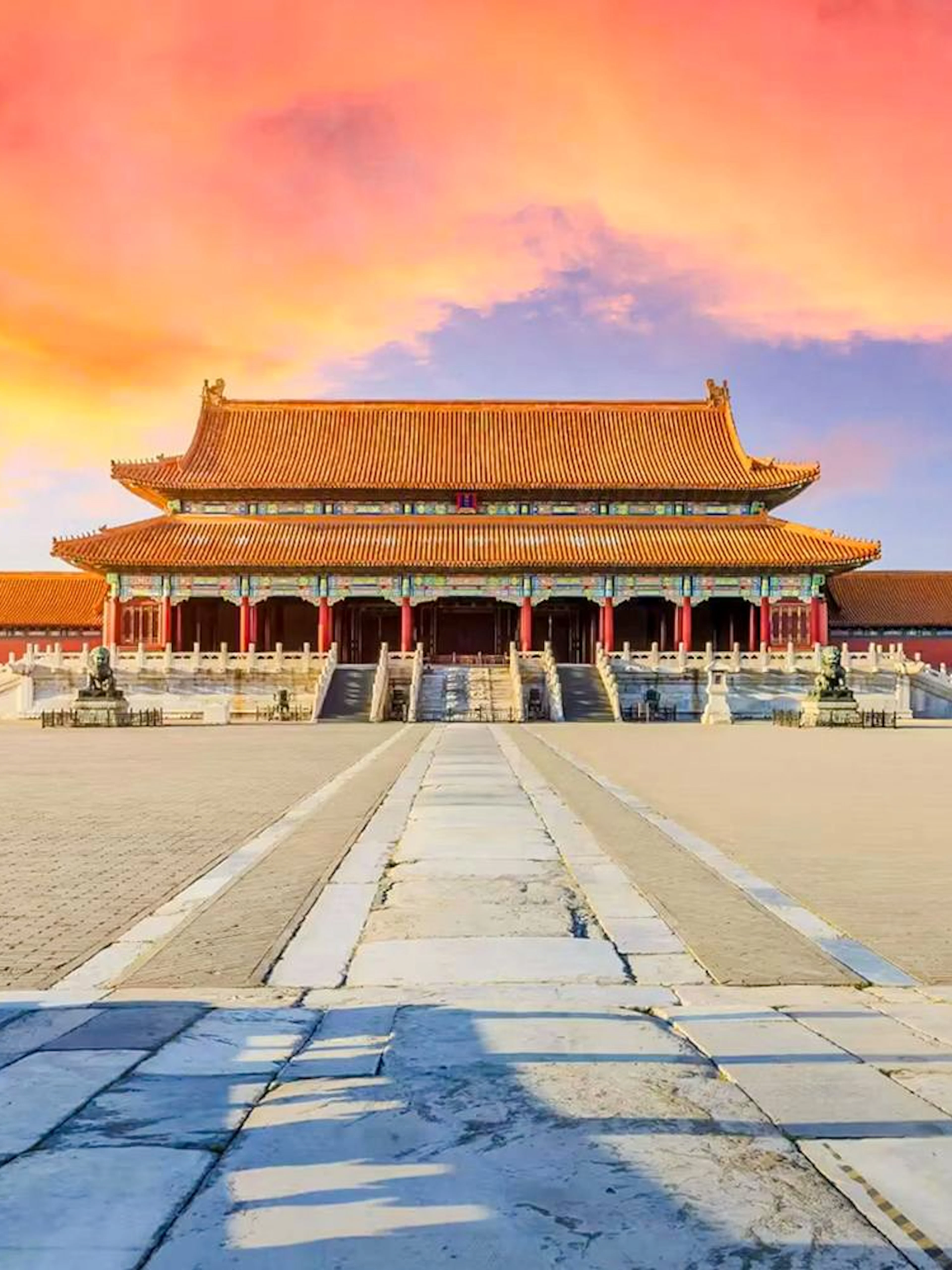
Set on a triple-tiered white marble terrace, the Hall of Supreme Harmony was the empire’s main throne hall for coronations, weddings, and state rites. It is the largest surviving wooden palace hall in China, and still feels overwhelming.

Hall of Central Harmony and Hall of Preserving Harmony

Standing behind the main throne hall, these two buildings reveal how ceremony actually worked: one for imperial preparation, the other for banquets and the Qing court’s final civil service examinations that shaped China’s governing elite.

Palace of Heavenly Purity (Qianqinggong)

In the Inner Court, the Palace of Heavenly Purity shifts the visit from public spectacle to private rule. This was the emperor’s residence in the Ming dynasty and an important Qing governance space, making palace life feel more personal.

Nine Dragon Screen in the Treasure Gallery

Inside the Treasure Gallery in the Palace of Tranquil Longevity area, the glazed Nine Dragon Screen is a standout. Its vivid imperial dragons, set among court treasures of jade and gold, reward visitors who add this small-fee detour.

Gallery of Clocks

The Gallery of Clocks gathers ornate European mechanical timepieces collected by Qing emperors, from automata-style table clocks to elaborate gilded designs. It’s one of the clearest places to see how global craftsmanship entered the imperial court.

Plan your visit to Forbidden City (Palace Museum)

  • Opening hours: Peak season runs from April 1 to October 31, from 8:30am–5pm, with last entry at 4pm.
  • Off-season runs from November 1 to March 31, from 8:30am–4:30pm, with last entry at 3:30pm.
  • Closed days: The museum is closed on Mondays, except Chinese statutory holidays.

Best time to visit

  • Best time of day: Arrive at 8:30am for lighter entry flow and quieter first courtyards.
  • Best days: Visit on Tuesdays, Wednesdays, or Thursdays for steadier crowd levels.
  • Best season: Choose late April, mid-September, or late October for comfortable walking weather.
  • Address: 4 Jingshan Front Street, Dongcheng District, Beijing, China | View on Google Maps
  • Area: The museum sits north of Tiananmen Square and south of Jingshan Park.
  • Subway: Beijing Subway Line 1 stops at Tiananmen East Station, about a 10-minute walk away.
  • Subway: Beijing Subway Line 1 stops at Tiananmen West Station, about a 10-minute walk away.
  • Bus: Routes 1, 5, 10, 22, 52, 90, 99, 205, and 728 stop nearby.
  • Walking time: Bus stops near Tiananmen are about a 10-minute walk from Meridian Gate.
  • Taxi: Vehicles cannot stop at the gate, so expect a 10- to 15-minute walk after drop-off.
  • Parking: There is no on-site parking, and public transport is the recommended approach.
  • Route note: Approaching from Tiananmen may involve separate security screening before Meridian Gate.
  • Meridian Gate (Wumen): On the south wall, it is the only entrance; arrive at 8:30am; security and passport checks apply.
  • Entry flow: Heaviest entry pressure is reported around 10:30am, when tour groups reach the first courtyards.
  • Gate of Divine Prowess (Shenwumen): On the north wall, it is exit-only; use it for Jingshan Park; re-entry is not allowed.
  • East Prosperity Gate (Donghuamen): On the east wall, it is exit-only; use it for Wangfujing; re-entry is not allowed.
  • Bag check: Bag and package check is available near the Meridian Gate entrance.
  • Audio guides: Audio guides are available at Wumen and Shenwumen in 13 languages.
  • Information: The Information Center is located in the Archery Pavilion.
  • Shops: Gift shops and bookstores appear at multiple points along the route.
  • Refreshments: Light meals and drinks are available on-site, but choices are limited.
  • First aid: A first aid station is available on-site for emergencies.
  • Step-free route: Wheelchair users can follow ramped detours along much of the central axis.
  • Route limits: Some side palaces and the Treasure Gallery include steps and only partial access.
  • Walking distance: Visitors with limited mobility should expect 2–4 km of uneven historic stone.
  • On-site help: Ask staff at Meridian Gate for the current accessible-route map.
  • Strollers: Strollers are permitted throughout the visit.
  • Bag policy: All bags pass security screening, and checked storage is available near Meridian Gate.
  • Identity checks: The passport used for booking must match the passport shown at entry.
  • Photography: Courtyard photography is generally allowed, but some interiors restrict flash or all photography.
  • Food and drinks: Follow posted food and drink rules inside halls, galleries, and interior spaces.
  • Behavior: Follow the one-way route, staff instructions, and all hall-specific signs.
  • Re-entry: Re-entry is not allowed after exiting through Shenwumen or Donghuamen.

Tips & guidelines

  • Go at 8:30am: The first courtyards feel calmer before the roughly 10:30am tour-group surge.
  • Follow the central axis first: Wumen, the Three Great Halls, Palace of Heavenly Purity, then Imperial Garden.
  • Leave side detours for later: The route is one-way, so backtracking is not an option.
  • Add both galleries only with time: Treasure Gallery and Clock Gallery suit slower, 5-hour visits.
  • Use the Imperial Garden as your pause: It offers the route’s best shade before Shenwumen.
  • Wear broken-in shoes: A full visit usually means 2–4km on uneven historic stone.
  • Ask for the accessible route map at Wumen: Ramps cover the central axis best.
  • Save the big panorama for after: Wanchunting in Jingshan Park frames the classic roofscape.

Frequently asked questions about the Forbidden City (Palace Museum) tickets

Yes. Same-day tickets are not sold. Slots open 7 days ahead at 8pm Beijing time, and peak dates can sell out within minutes.